
It was such an honour to host a delegation led by the Vice-Chancellor of the University of Lagos (UNILAG), Professor Folasade Ogunsola, OON, FAS, at our factory on Wednesday, January 28, 2026.
The strategic visit to our World Health Organization (WHO) compliant facility in Ota, Ogun State, was part of a broader engagement aimed at fostering robust partnerships between the academia, industry, and global research institutions. The discussions centered on advancing
child health through innovative, accessible and locally relevant healthcare solutions as well as exploring the potential for local vaccine production.
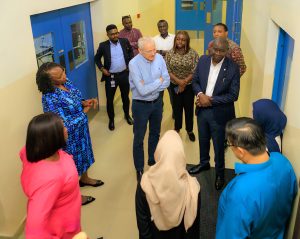
The delegation included a renowned global health expert, Professor Georg Holländer, Director of the Botnar Research Centre for Child Health (BRCCH) and Medical Director of the Botnar Institute of Immune Engineering (BIIE), Basel, Switzerland, alongside Professor Matthew Ilori, Director of the Academic Planning Unit at UNILAG. They were warmly received by our Managing Director and Chief Executive Officer, Mr. Biola Adebayo, a proud alumnus of UNILAG and members of the executive management team, including Mrs. Nmaka Tijani (Associate Director, Quality and Regulatory Affairs) and Mrs. Abibatu Ariori (Head, Factory Operations).

During the engagement, Mr. Adebayo reaffirmed Fidson’s unwavering commitment to collaborative initiatives that bridge the gap between research and industrial application. Reflecting on his early years in Fidson, he expressed gratitude for the Vice-Chancellor’s early professional support and emphasized the critical role of such partnerships in national development.
Addressing the pivotal topic of local vaccine manufacturing, Mr. Adebayo highlighted the immense potential within Nigeria’s pharmaceutical sector.
“Fidson is fully equipped and ready to drive local vaccine manufacturing” Mr. Adebayo stated. “However, sustainable success in this area requires a cohesive
ecosystem involving strong government support and guaranteed offtake assurances
from international bodies such as UNICEF and the World Health Organization.”
In her remarks, Professor Ogunsola, who serves on the Foundation Board of the BIIE,
emphasized the visit’s objectives, which included identifying synergies for local vaccine
production, creating internship and sabbatical opportunities for students and faculty, and
strengthening the academia-industry pipeline.

Similarly, Professor Holländer provided a compelling scientific context for the potential
collaboration, noting that current global immunology research often relies on narrow datasets
that exclude the diversity of populations in the Global South. He shared insights from his
research indicating significant variations in immune responses to vaccines among children in
different geographies, such as Lagos, London, and Brazil.
“Our goal at the Botnar Institute is to democratize access to life-saving treatments,” Professor Holländer remarked. “We are working to reduce the cost of antibody therapies, which currently exceed $1,500 per dose, to as low as $10. Partnering with capable local manufacturers is essential to ensuring these innovations are affordable and accessible to those who need them most.“- Professor Holländer
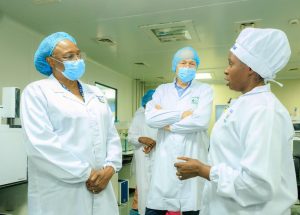
The visit featured a tour of Fidson’s over 43-acre facility. The delegation was introduced to our state-of-the-art manufacturing processes, rigorous quality assurance processes, human capital development and safety culture.
The visiting team commended Fidson for its scale of operations and adherence to global best practices, validating the company’s position as the leader in the pharmaceutical landscape.